Featured

Matilda’s Work Samples


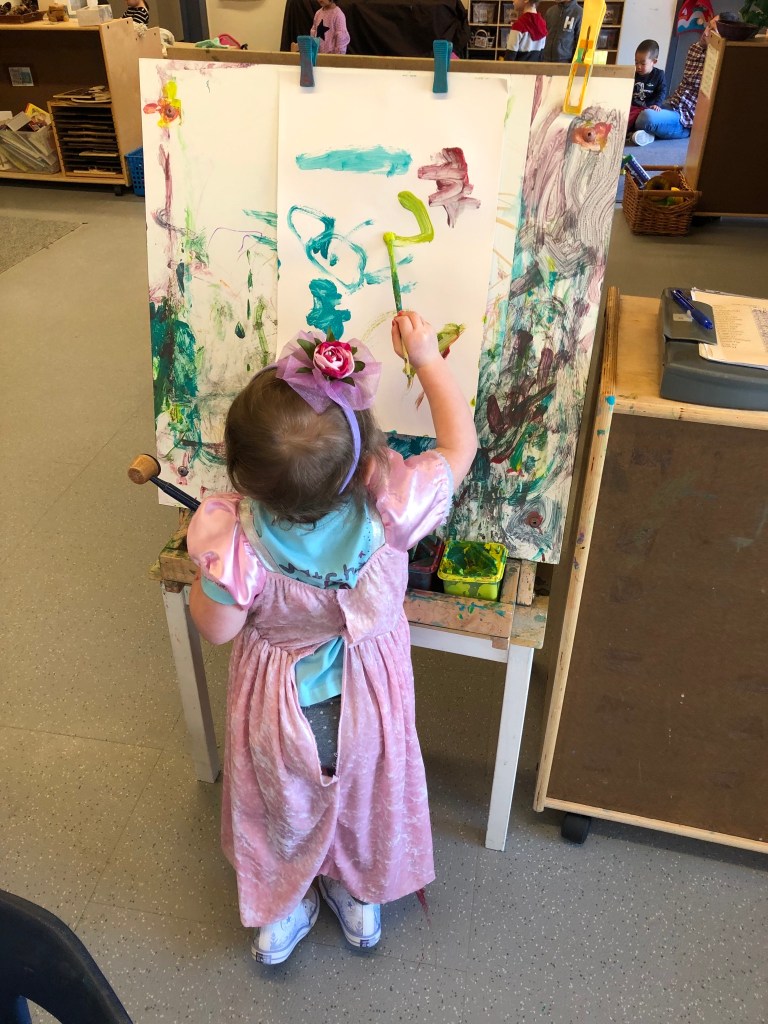
IN ACTION PAINTING

Matilda notices a blank page and starts using her right hand to paint while holding a musical bell in her right. Matilda says, “I’m using the colours blue, red and green. I am drawing the sun and the stars” Once she was done the painting you could tell she was proud of herself as she walked over to the educator to show off her completed artwork.
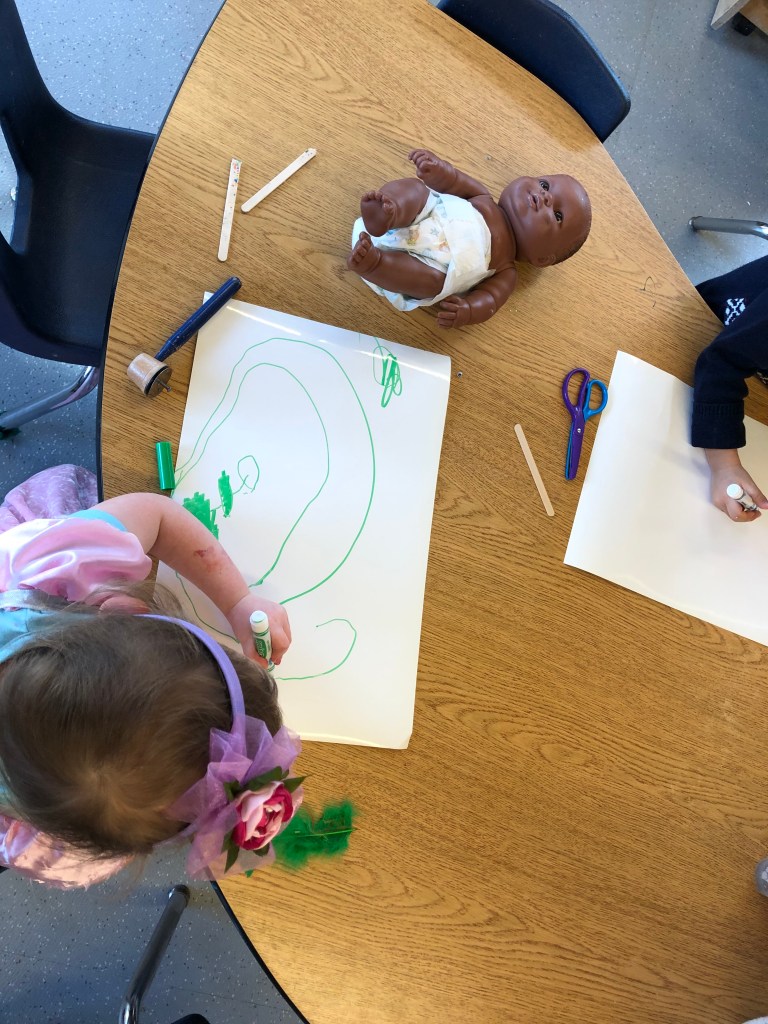


WATCH ME DRAW

Matilda starts off by making the letter J. Matilda says that, “J is the letter that start off the name Joanna.” She continues drawing by making a helicopter going to the earth. In the same drawing she looks at the educator and says, “look I made a cowboy hat”. It can be amazing how many different images Matilda can see in her own drawing.


LEARNING OUR LETTERS

Matilda demonstrates that she can trace the letters of her name. She is continuously trying to free hand draw the letters on her own but it is quiet evident that it is a work in progress.

MIXING OUR PRIMARY COLOURS

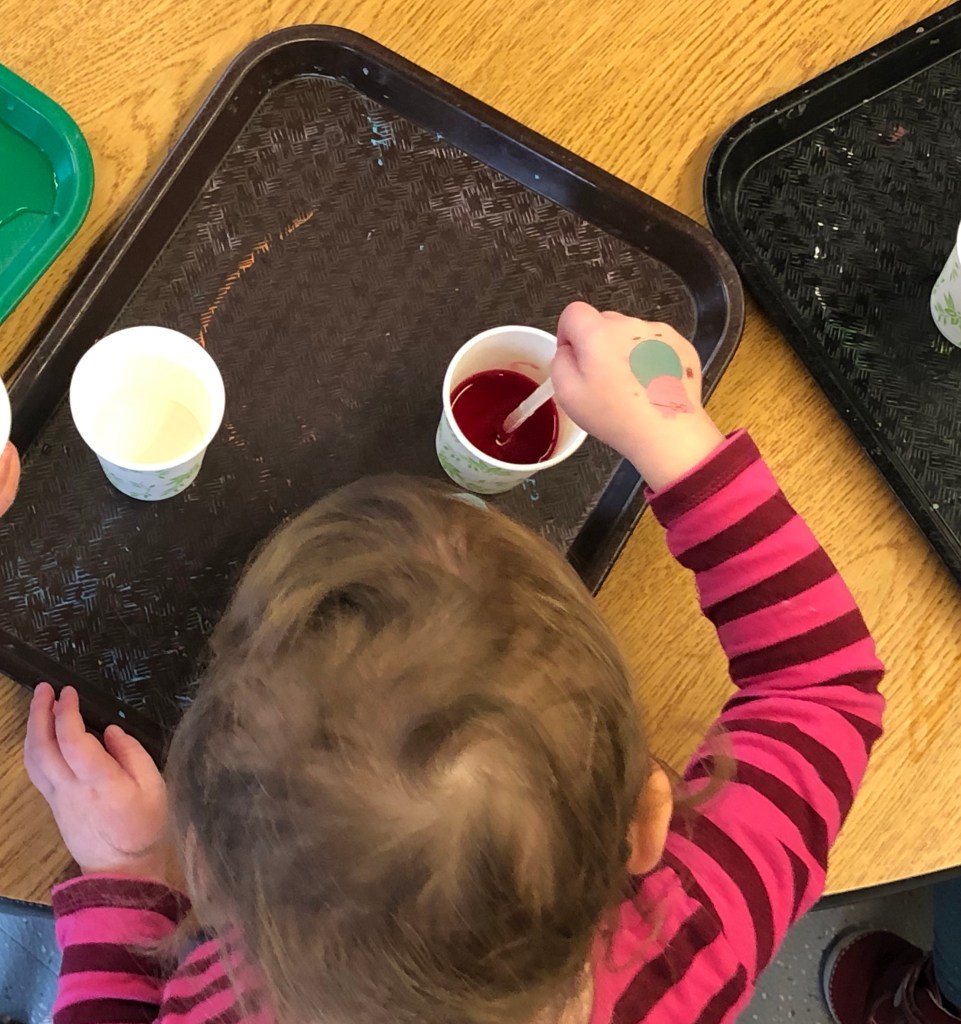
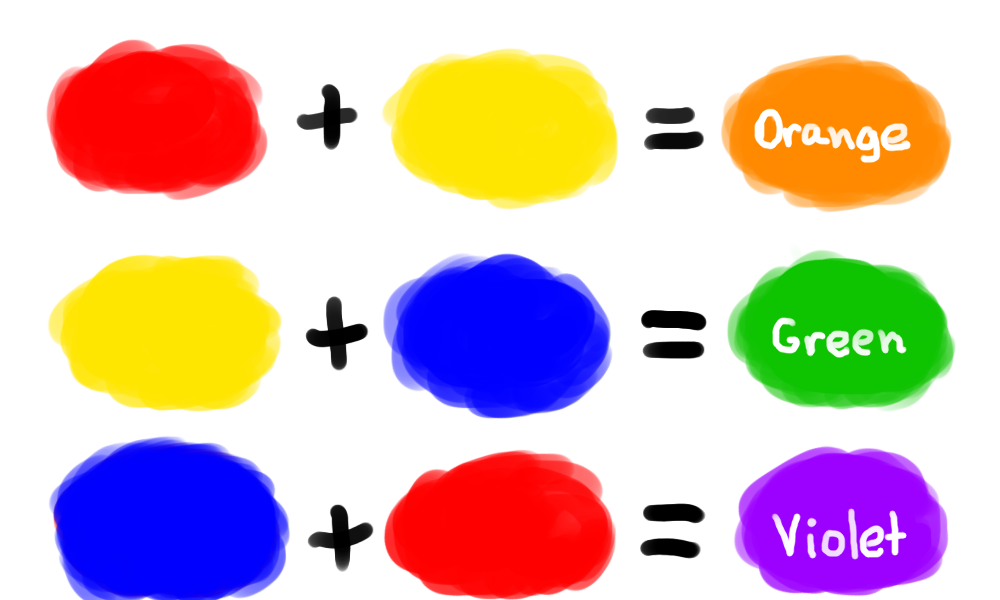
Matilda is working on her pincer grasp by using her middle and index finger along with her thumb to grab the different food colours with a poppet to create a colour of her own. The educator in the room asked what colour the children wanted to make and Matilda said, “purple.” The educator ask how do we make purple and M said, “mixing blue and red makes purple and purple is my moms favourite colour, that’s why I really wanted to make that colour.”


ME AND MY TREE

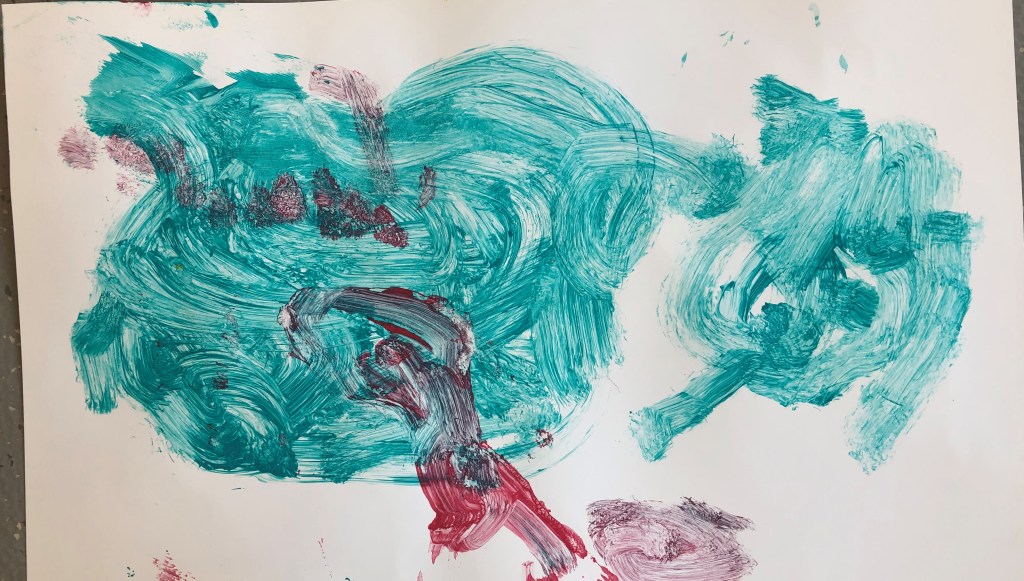
This beautiful picture of the tree that reminds Matilda of the one back home that she likes to play at when she is at home. Matilda is able to take what she see’s around her home and neigbourhood and is able to bring it to life in the classroom in a painting.


BLOCK PLAY IS THE BEST PLAY

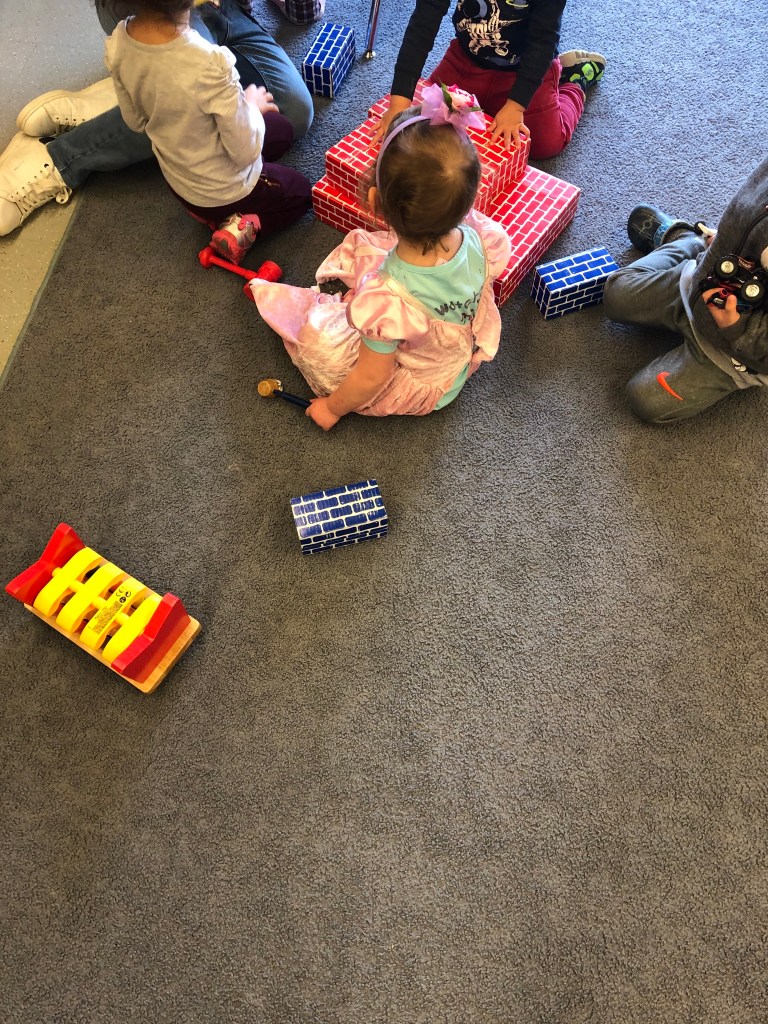
Using her gross motor skills Matilda built a tower with her other classmates demonstrating the ability to work together and build side by side with others.
She said to one of her classmates, “I like the red blocks only.” Matilda is then found building with only the red blocks leaving the blue ones on the side.


MY HAND PRINT

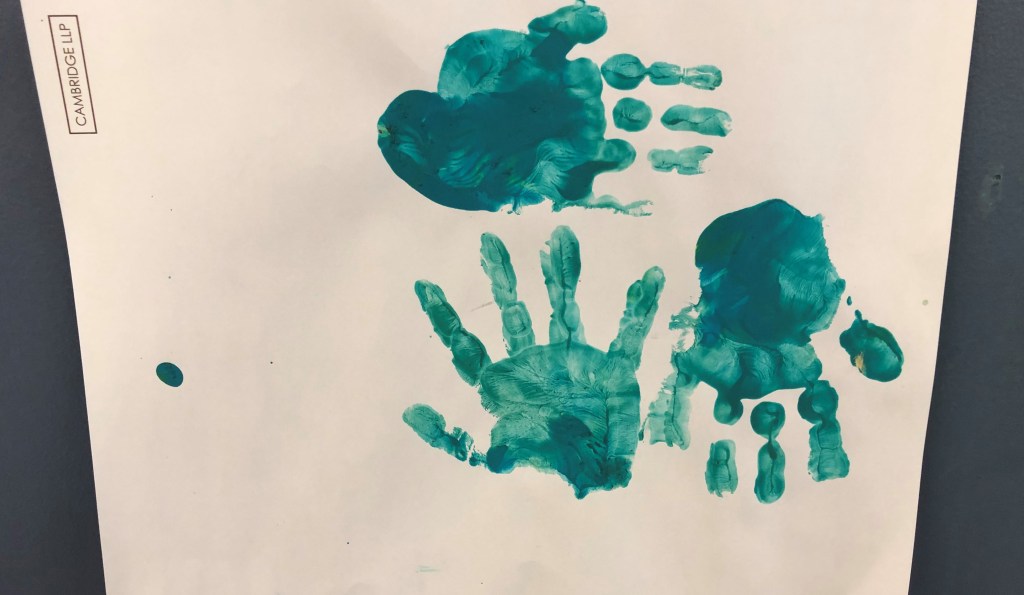
Matilda has always been fascinated with her hands print and every since she was a toddler she is always found found tracing her hands on paper and painting them and leaving prints of them.
Family Meeting

This page will describe to you what we have noticed Matilda’s strengths, interests and accomplishments have been during her time with us in the preschool room. In addition we have suggested some activities to build upon her learning and development. As much as us educators have an influence on Matilda we can confidently say that, “Children learn in the context of their families and families are the primary influence on children’s learning and development,” (Cohrssen, Church & Tayler, 2010, p.10). With this being said we want to work in partnership with you and we would like to give you some fun activities to try out at home where you see fit. Please do not hesitate to let us know how Matilda reacts to these. Myself and my colleague would like to create an environment of open-communication so let us know if there are any areas of development you would like us to work on with her in the classroom to ensure continuity of care! If either of you have any talents and skills of your own, please feel free to share them with us as your strengths are just as valuable to us in the development of Matilda’s learning. We believe that as Matilda’s family, you are the experts in her life. If you feel that we have missed anything in our assessments, please let us know as we value your decision making in this process. We strive to promote and respect the diversity of your unique family dynamics and circumstances. If there is anything that we have presented that does not align with your families values, culture, beliefs or backgrounds, do not hesitate to notify us.

We would like to thank you for taking the time out of your busy schedules to collaborate with us for Matilda’s learning and development. I am sure that she will benefit greatly from this shared partnership.


As mentioned before, and I’m sure you notice it as well Matilda can always be found immersing herself in any creative activity. She has a strong artistic sense, she is always creating art pieces and is often all dressed up. She is often found painting, she is very knowledgeable about the colours and how they mix.

Arts and Science at School: "Sesame Street: OK Go - Three Primary ...
Mixing Primary Colours!
  • A bit of a science experiment that can be done at home to tap into her communication and inquiry skills can be mixing different colours of food colouring or paint that you may find around the home. If not your local dollar store should have paint, We would recommend buying the primary colours: red, blue and yellow, which can make an array of different colours.
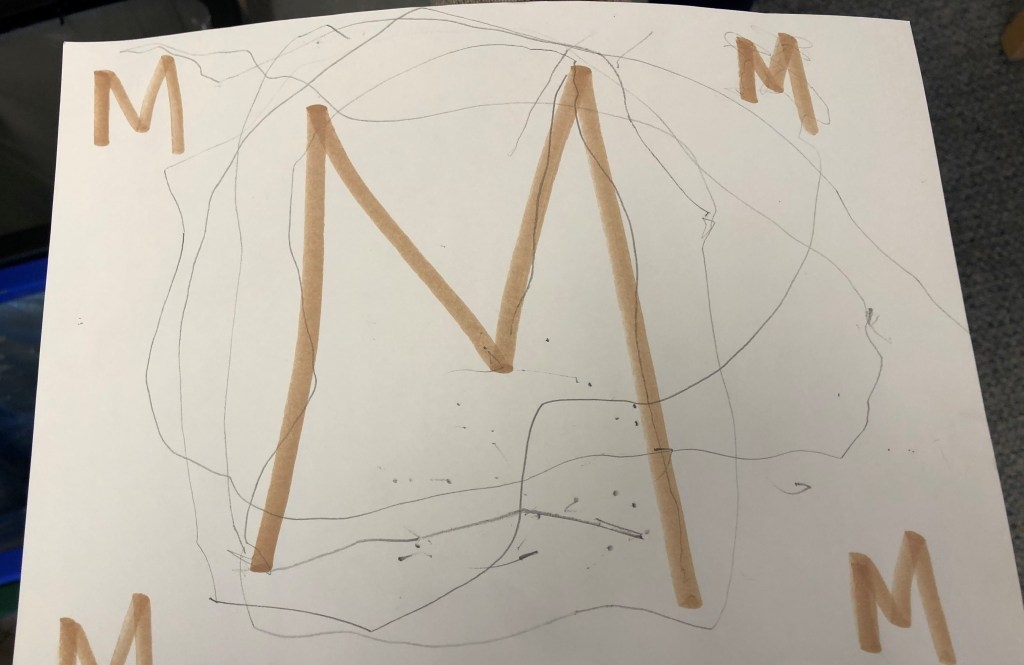
  •  For another activity if you don’t have any canvas the dollar store should have it as well if not white paper will work. You can place tape in different directions  creating a pattern or with a purpose, for example, create the letter M in the middle of the page. Then let Matilda mix colours and paint over it. Let the paint dry and then carefully rip off the tape. 

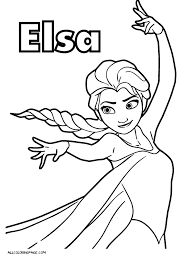
   Matilda has a huge imagination and often dives into the character Elsa, from the movie Frozen. Matilda can always be found using her imagination by herself but without a doubt she loves involving her peers.

Frozen (Little Golden Book): RH Disney, RH Disney: 9780736430517 ...
  • You could take a trip to the local library and grab picture books about Frozen and take the opportunity to read. It can be used where there is free time during the day or as a bedtime ritual.  
  • An activity that can keep the body active and moving is by asking Matilda work on creating a dance routine to one of the Frozen songs. If she feels comfortable, ask her to present it to you and then record it, and voila, a memory that will last a lifetime! 
  • Create a dramatic centre in your home using bed linen and lights so that Matilda has an area in the home for dramatic expression of her favorite characters 

  A huge accomplishment and milestone for Matilda is her ability to go from tracing simple items to freehand drawing and painting. She went from holding a writing utensil with a fist to placing her fingers in a certain way in order to write and draw.
 

  • Print out photos of the characters from Frozen and have Matilda colour, cut or trace out the images. For tracing place a printed image onto a window with some tape, then use a white paper on top and have her trace out the image behind it. 
Frozen Coloring Pages | Free Printable Coloring Page
An example of a photo you could print up!


Reference

Cohrssen, C., Church, A., & Tayler, C . (2010) Victorian early years learning and
development framework evidence paper practice princle 1: family-centred
practice.
Retrieved from https://www.education.vic.gov.au/Documents/childhood/providers/edcare/evifamilyc.pdf

Child Pedagogical Documentation

Reason for Pedagogical Document for the Child:

  The data that inspired this documentation were the observations of her dressing up in princess dresses and shoes almost daily at the child care centre. We observed Matilda engaged in socio-dramatic play of her favourite movie Frozen. She acted out the characters of the movie alongside her peers while delegating roles and tasks. Matilda often asks her educators to play the soundtrack from the movie to accompany her socio-dramatic play. 

We selected this learning to document because it showcases Matilda’s growing identity formation. In this case, this documentation showcases her love for socio-dramatic play, creativity, and imagination. This is significant because it tells a lot about Matilda’s inner dreams and likes. As Matilda gets older she will be able to look back at her likes and dislikes through this documentation and explore how she has grown and changed in her identity. During the early years, children are discovering who they are, what they like, and their dislikes. Many children do not have the opportunity of having documentation that showcases who they were as individuals during their early years.   We decided to display it in a book format so that it is easy for Matilda to access. The documentation can be placed somewhere in her home or the child care centre that is easy for her to access. Matilda can easily pick up this format of documentation and look through it. Matilda’s parents can also read the book to Matilda until she becomes old enough to read it for herself. A book format will be engaging for Matilda to look at especially during her childhood years.

Family Pedagogical Documentation

Reason for Pedagogical Document for the Family:
Matilda explores and learns about her world through art formation. Every time we observed Matilda we noticed that she always dressed up and had a marker, paint brush in hand. She can be often found displaying how she feels and what she is thinking.  The work samples in Matilda’s portfolio are a great example of her creativity in action. She is often in the zone and working on her own but loves conversing with the educators about what she is creating.
When displaying it to her parents it would be best to have it printed on a piece of paper or an electronic version. It would be displayed with photos to show her progression, and quotes to help illustrate what is happening in the moment. The documentation is significant because it ultimately shows the milestones she is reaching in terms of creativity and expression.   Due to Matilda spending the majority of her day in the child care centre, this documentation gives her parents an opportunity to see the progression in Matilda’s development that her parents would not otherwise see in the home environment. This documentation makes Matilda’s learning visible to her family and can serve for future conversations with her educators about Matilda’s skills during parent meetings.

Anecdotal Records

Child’s Name: Matilda
Date of Observation: 16/01/ 2020
Age: 3 yrs old
Location: Outdoor area of child care centre
Time: 9:30 am – 10:30 am
Observer: Kristen Sterling & Kassandra Tischer

ANECDOTAL RECORDS AND INTERPRETATION
Anecdotal 1:
Matilda rides a bike with a musical symbol in each hand and her forearms on the handles of the bike. She travels on the bike path down the hill with both feet on the ground. As Matilda travels on the bike path along the fence she puts her feet on the pedals and starts to travel up the hill on the bike path. After several attempts on pedaling forward Matilda stops the bike, drops the symbols and puts the bike she is on to the side with the rest of the bikes lined up. Matilda walks over to another bike and she rings the bell on one bike three times and then walks away from the bikes and up the hill towards the covered seating area.  

Domain: Physical
Skill: 5.2 Gross Motor Skills- Riding

Interpretation 1:
Matilda appears to enjoy playing on her own as she moves around on the bike with no one else around. She seems to be practicing the ability to pedal on the bike with two feet as well which is what is developmentally appropriate for her at this age. Matilda does seem a little interested in the bell that appears on the other bikes as she goes to ring them. It is interesting to note how keen Matilda was on holding onto the musical symbols and using the bike at the same time. 
Anecdotal 2:
Matilda walks toward a low square table that has a bin of musical instruments in it. She searches through the bin and picks a wooden instrument in her left hand and swings it around. Matilda then picks up a cow bell with her right hand and starts to knock the wooden instrument on the cow bell and starts to march in place. She continues to march forward towards her educator and says, “I need to go to the washroom.” The educator responds saying, “You need to remember to go before we come outside.” The educator brings Matilda and three other children inside to use the washroom.

Domain: Physical
Skill: 5.2 Gross Motor Skills – Movement and Expression 

Interpretation 2:
Matilda appears to be fascinated with the bin of musical instruments as she surfs through it. You can tell she likes music as she was grasping onto the musical instruments before and is now going through the musical bin outside. She picks up 2 different objects and starts to bang them together. It also seems that she likes the sounds she is smiling and marching in place. Matilda is also able to communicate with adults properly about how she feels as she needed to go to the washroom and was able to ask the educator. 
Anecdotal 3:
Matilda returns from the washroom with her educator and three other children. Matilda smiles and gallops towards the green turf in the middle of the playground. She steps onto a 3 foot wooden U shape board. Matilda starts to rock side to side. She starts off slow and slowly moves faster while Matilda sits on it with her back facing the board and starts to rock back and forth. She then lies down with her legs out and feet up on the board and watches other children play around her. Matilda stands up and then sits back down with her back facing the open area on the wooden U shaped board. She starts to rock back and forth by herself for 2 minutes.  

Domain: Physical
Skill: 5.2 Gross Motor- Balance

Interpretation 3:
Matilda is able to express herself through her facial expressions as she appears to be happy after returning from the washroom.  Matilda expresses a large interest in the wooden U shape board and she spends a tremendous amount of time on it and exploring it. She is exploring how the wooden U shape board moves in adjacent to how she moves her body. She is working on her balancing skills, as she rocks it side to side. It is amazing to the the amount of concentration and experimentation that she is experiencing while on the board.
Anecdotal 4:
Matilda is then approached by a boy and he tries to rock her on the wooden U shaped board. Matilda says, “stop it I don’t want to to shake me on dis.” The boy then walks away from her. Matilda while sitting on the board moves her body and lies down on her side with her legs on one side and head on the other. She then slips off the board and the boy that approached her earlier returns and takes the wood U shaped board from her. Matilda then stands up and shrugs her shoulders while looking at the boy. She then walked away from him and walked towards a 2 foot wooden spool which is on the green turf area.

Domain: Cognitive
Skill: 4.1 Self-regulation 

Interpretation 4:
Matilda’s ability to communicate with her classmates through both verbal and nonverbal actions is displayed in a very positive manner.  Without using her body she is able to express what she wants verbally to the boy that tries to rock her off. Once she slips off the board instead of getting into some sort of confrontation she is able to self regulate herself by shrugging her shoulders and walking away from the boy rather than getting into an altercation or crying. It is amazing how she then is able to focus her attention and energy to another object outside.  

Anecdotal 5:
As Matilda grabs the wooden spool, a couple of girls walked towards her and she waved her hands at them and said, “no this is mine.” Matilda started to push the spool up the hill with two hands. As she reached the top of the hill she approached two girls who were crying. Matilda looked at them but continued walking with the spool. By herself Matilda sits on the spool and then falls forward. She tries to do it again, and she balances herself and then falls again. Matilda rotates the spool and proceeds back down the hill with her stomach on the middle part of the spool. She slowly rolls down the hill until the spool hits the fence at the bottom of the turf area. At the bottom of the hill Matilda raised her right hand up towards an educator with her thumb pointed upward. Matilda then was helped by the educator to sit on the spool with Matilda’s back against the fence.     

Domain: Communication, Language and Literacy
Skill: 3.1 Using Verbal and Non-Verbal Communication
  
Interpretation 5:        
Again here we notice that Matilda is able to non-verbally communicate with her peers what she wants by waving her hands at them. Matilda is fascinated by the wooden spool in the yard and tries to move about on it by balancing. She is very determined and does not give up and this is shown by her falling down and getting back up and trying again. Matilda is experimenting how the spool moves by lying down on it on her stomach and rolling around. With communication with her educator she is obtained help from her educator. Matilda is able to complete what she was attempting to do on her own and that is sitting on the wooden spool. This time around she is doing it with her back against the fence.   
 
Anecdotal 6:
Matilda rolls the spool on the concrete and the ECE tells her that, “it’s not safe” and that, “she should go on the grass”. Matilda asks the ECE, “will you play with me?”. The ECE replies, “yes, I’m coming”. Matilda then rolls the spool off the concrete and onto the grass, stops and looks at the ECE and stares.

Domain: Communication, Language and Literacy
Skill: 3.4 Conversing with peers and adults

Interpretation 6:
Matilda seems to enjoy the company of the adults in the centre. This may be because she has an older sibling and is used to being around older people.
Anecdotal 7:
ECE meets Matilda on the grass and begins to sing the song “rollie, pollie, ollie” with Matilda as she continues to roll on the wooden spool. The ECE says, “you have great upper body strength” as Matilda lies on her stomach on the wooden spool. Matilda sits on the spool while continuing to interact with the ECE.

Domain: Physical
Skill: 5.2 Gross Motor Skills- Movement and Expression

Interpretation 7:
Matilda is at an age where she feels comfortable taking risks in the outdoor area. This may be because she has developed enough gross motor skills, body coordination, and strength to do risk taking activities safely.
Anecdotal 8:
Matilda joins the ECE and the three other children on the carpet for music and movement. The ECE begins to sing the song, “head, shoulders, knees, and toes”. Matilda repeats the action that the ECE does. First by touching her head, then her shoulders, then knees, and then toes. Matilda is also repeating the words while mimicking what the ECE is doing.

Domain: Physical
Skill:  5.4 Auditory Skills and Music

Interpretation 8:
Matilda is aware of her body parts. She can say/sing them as well as point to them at the same time. Being able to identify the different parts of the body is a requirement of her age in the Ages and Stages Questionnaire.

Parent Interview

Background Information

Date of parent interview: Jan 30, 2020

Child’s name: M                                                 

Child’s date of birth: Jan 19, 2017

               Family  
M is 3 years old. She lives with her biological mother and father who are married. She has one older sibling, a brother aged 8. Her mother is of Jewish background and her father is of Japanese descent. M, her brother, and both of her parents were born in Canada. M’s father converted to Judaism in recent years and this is the families religious background.   M’s mother is a counsellor and her father is a top chef in Toronto. She is from  a middle class background. Both of her parents are university and college educated.   M’s family has 1 dog that is older in age and she has close relationship with her maternal grandparents and her aunt.   M’s families parenting style involves using a calm demeanor due to her counselling background. The educators at the centre implement a lot of these same practices with M to keep the parenting style consistent. This is also used when M is displaying challenging behaviours.  
   Other important people in the child’s life  
M is not very close with other children at the centre. She has a secure attachment with the educators. M has been at the centre since she was an infant so the centre is like her second home. M is usually seen showing her work to her educators and staying close by to them during the day. Her older brother also attended the centre, so there is a close family relationship with the educators and supervisors.   During a traumatic time in the family’s life, M also had a secure attachment with her aunt and her grandparents who would pick her up most times. She usually talks about her aunt and grandparents while she is at the centre.   M has one friend at the centre. She likes to talk about her friend and often picks the child to engage in activities together.        
       Parent’s description of the child’s temperament, interests and strengths
M’s temperament is slow to warm up. She is slow to warm up around new people in the classroom and new routines. M is usually seen staying away from the person until she gets to know them. M also takes a while to adjust to new experiences. When there is a change in her routine, she often cries a lot and is slow to adjust.   Drop off in the morning is a difficult time for M. It takes her a long time to say goodbye to her mother. This is slowly getting better. M has a toy that she brings to help her with the morning transition. She will hug this toy until she feels better. Her mother and the educators gave M a lot of time during the morning for her to adjust and transition. The educators have pictures of her family in an album and sometimes M looks at this for comfort. She will also draw pictures of her family to self-regulate. When M is crying uncontrollably, the educators will give her space to cry, such as sitting down in a certain area of the classroom.   When M is upset, she cries a lot. She is very aware of her emotions and knows how to express them. She is able is vocalize that she is sad or mad.   M has excellent vocabulary skills. She was speaking in full sentences from the age of 17 months. She is very expressive and has enhanced recall and memory. M is able to recall memories from family vacations and other events in the past.   Overall, M is very social, happy, enjoys talking, and is comfortable with adults more so than other children. Her favourite thing to do to in the classroom is put on the princess dresses, paint, colour, draw, and play with blocks. Another favourite area of the classroom is the home area. She enjoys playing with her baby dolls which is named after her late sister.   M uses her baby doll for self- regulation when she is feeling upset. Overall, M is very independent. She is often seen playing by her self, and prefers to be amongst adults rather than other children. She enjoys doing things on her own during work time.
    Significant health issues
M does not have any significant health issues. She was not born prematurely and does not have any dietary restrictions or allergies.   M’s family members do not have any significant health issues either.   M did not have any speech delays or any other concerns with her growth and development.
     Significant life events
There was a traumatic event in the family a few years ago. M’s mother lost a baby full term during the birth. M’s mother was hospitalized for one month follow the loss. M held the baby prior to the death. Their parents named the baby Delilah. M stayed with her grandparents and aunt during this time. M cried a lot and was sad during this period in the family’s life. M talks a lot about her late sister often at the centre. M has a baby doll that she named after her late sister.
         Additional Information
M likes to have a structured routine. If her routine is slightly adjusted, she becomes upset. During drop off, she needs to go around the entire centre and say good morning and hello to everyone before she goes to her room.   M was toilet trained from a very early age and she does not speak another language.
Design a site like this with WordPress.com
Get started